Scheduling for independent medical groups
A real constraint solver builds a fair month in minutes. AI handles the language. You approve.
Built by a practicing emergency physician who also runs the schedule.
The problem
A month of shifts is not a spreadsheet problem.
Coverage, rest, caps, night blocks, time off, fairness. Dozens of rules that all interact, for every provider, every day. By hand it takes days and still feels unfair.
Why Coranth
Most tools
A language model can draft a schedule. It cannot promise every coverage minimum, rest period, and cap is met. It fails quietly.
Coranth
An optimization engine meets every hard rule, or names what is blocking the month. AI only handles the language. The math builds the schedule.
Coverage, rest, caps, and night blocks are met exactly. When a month cannot be built, Coranth says why and helps you negotiate a fair way through. It never quietly breaks a rule.
How it works
In plain language or per provider. Coranth warns you when two rules conflict.
Every shift assigned under your hard rules, the soft ones balanced. If it cannot be built, you see why.
Your team sees their shifts, requests time off, and trades shifts from their phone.
What you get
Nights, weekends, and holidays spread evenly, with the count on the table.
Requests, preferences, and trades from a phone. You approve. Nothing changes without you.
Met exactly, or the month is reported unbuildable with the reason. Never quietly broken.
Place shifts by hand, lock the ones that matter, and let the solver fill the rest.
Personal schedules, calendar files, PDFs, and a change history from one published record.
Many sites, many provider types, monthly or two week periods. Any size.
Fairness
Nights, weekends, and holidays spread evenly among the people who do not prefer them, and the count shown to everyone. When the math is on the table, the argument ends.
Nobody carries more than one night above the group average.
Coranth was built by someone who has spent nights in the department and days holding the schedule together.
A practicing emergency physician and physician administrator.
Why it is different
For independent physician and allied health groups, one site or many. No spreadsheet, no black box, no guessing.
See it
The real product on demo data. No real group.
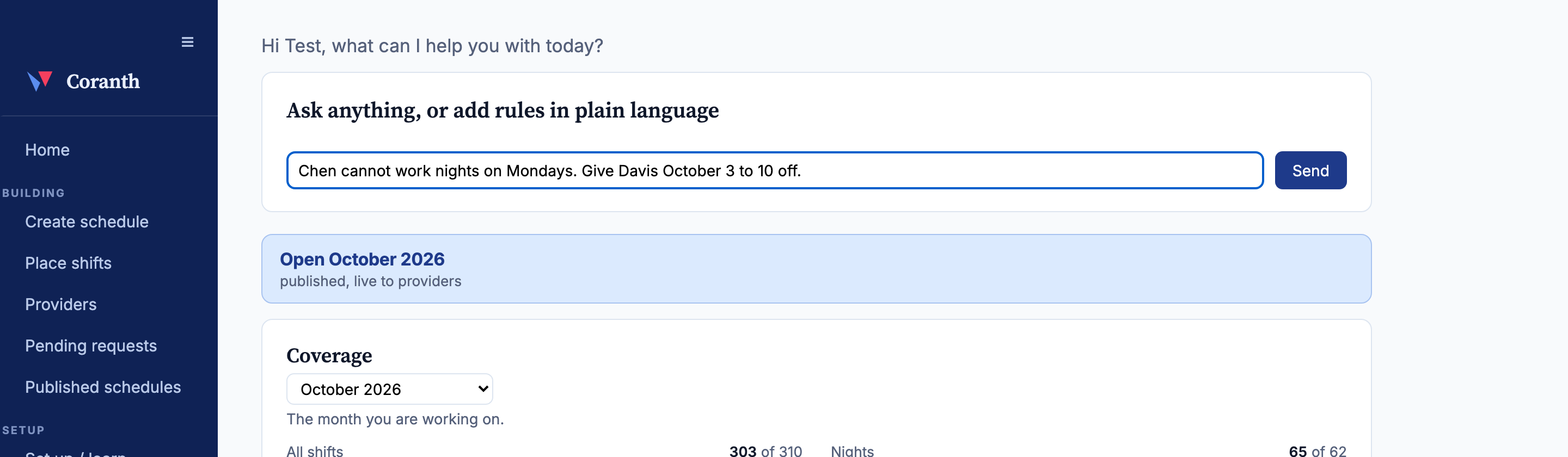
"Chen cannot work nights on Mondays. Give Davis October 3 to 10 off." Coranth shows what it understood before saving anything.
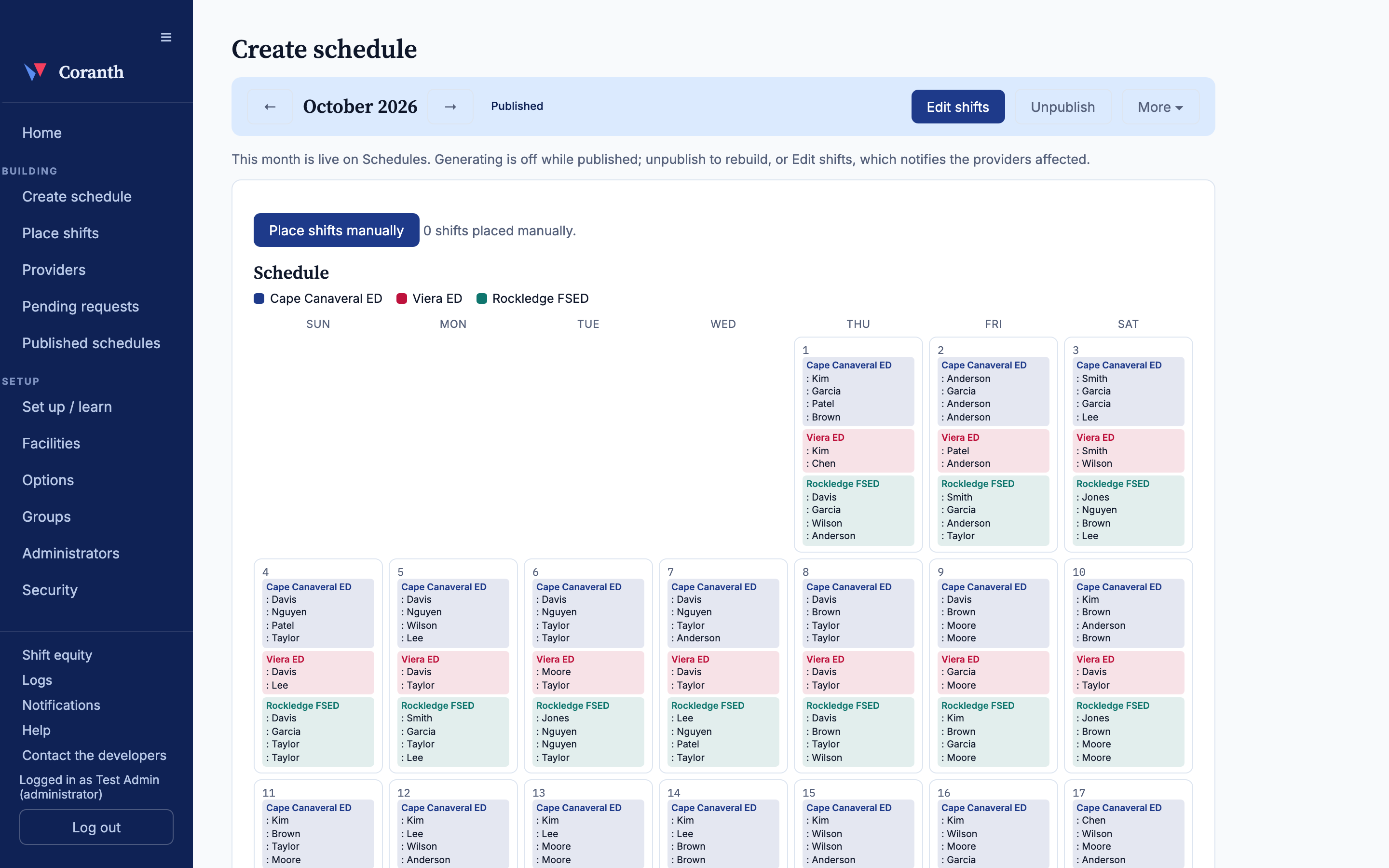
The whole month in about a minute. If it cannot be built as asked, you get complete alternatives and what each one gives up.
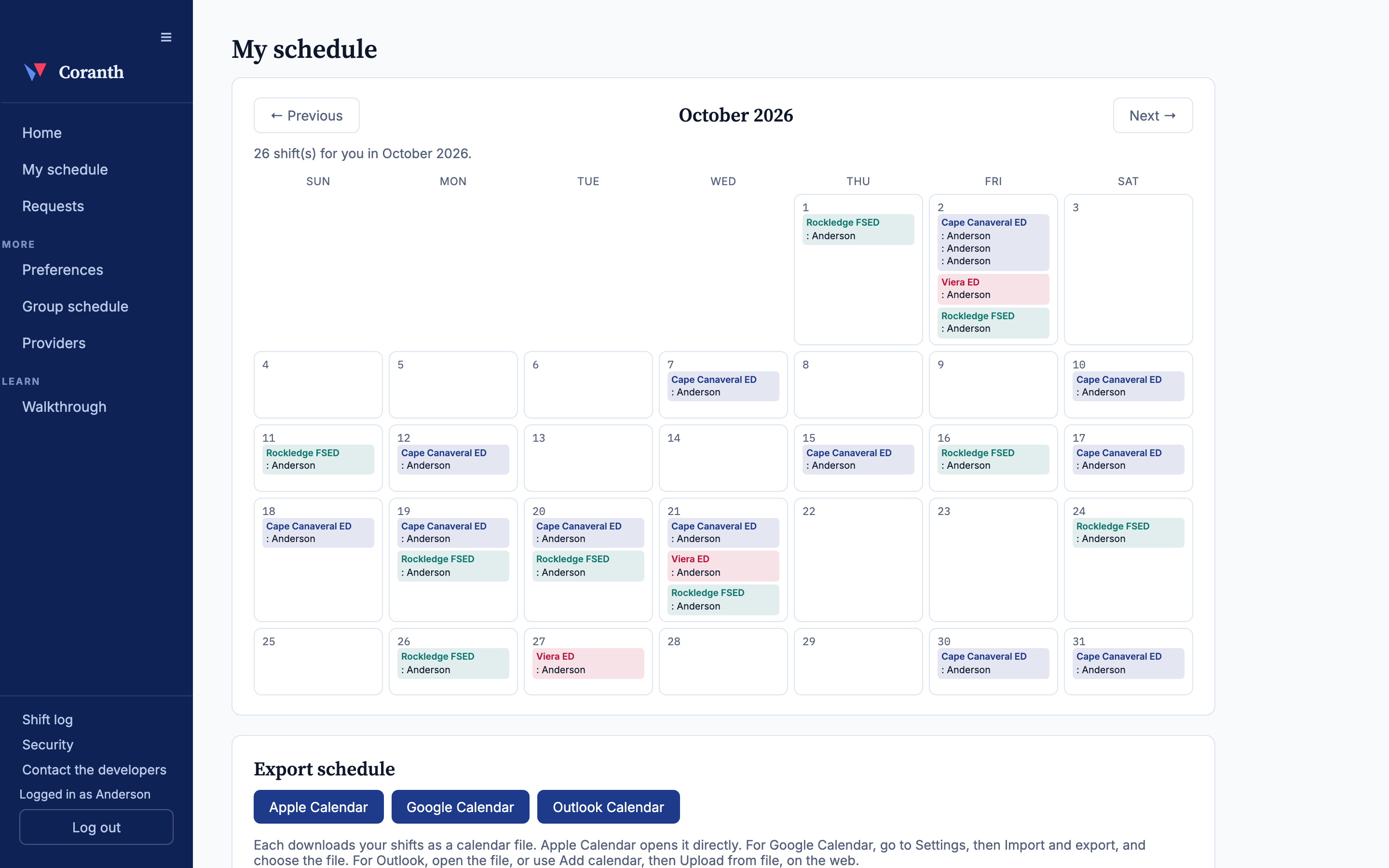
Each provider gets their month by email, as a PDF and a calendar file. Swaps happen between providers, rules still enforced.
Compare
What you are choosing between, with public prices where they exist.
Publishers
Displays a month somebody built by hand. Cheap, and it should be: the hard part still happens at your kitchen table.
Amion lists at $449 a year. The nights spent building the month it displays are not included.
The builder
Builds the month from your rules. Requests, swaps, equity, and publishing included. Live in a week, your data comes with you.
One flat price per group. No per provider fees, no implementation fee, no quote.
Enterprise builders
You pay health system prices for a solver: per provider licensing, a quote you have to ask for, months of implementation. And their own reviewers say the month still needs finishing by hand after the solver runs.
Third party estimates put a ten provider group near $49,000 in year one. Expensive, slow, and you still do the last mile.
Prices from public listings, third party estimates, and published user reviews as of September 2026. Not offers from those vendors.
Pricing
Per group, per month. Never per provider.
Founding groups
$299 / month
for six months, then $399. The first month is free while you move in.
For a group of thirty, $399 is about $13 per provider per month.
See it run on your rules, then start your free month.
Request a demo